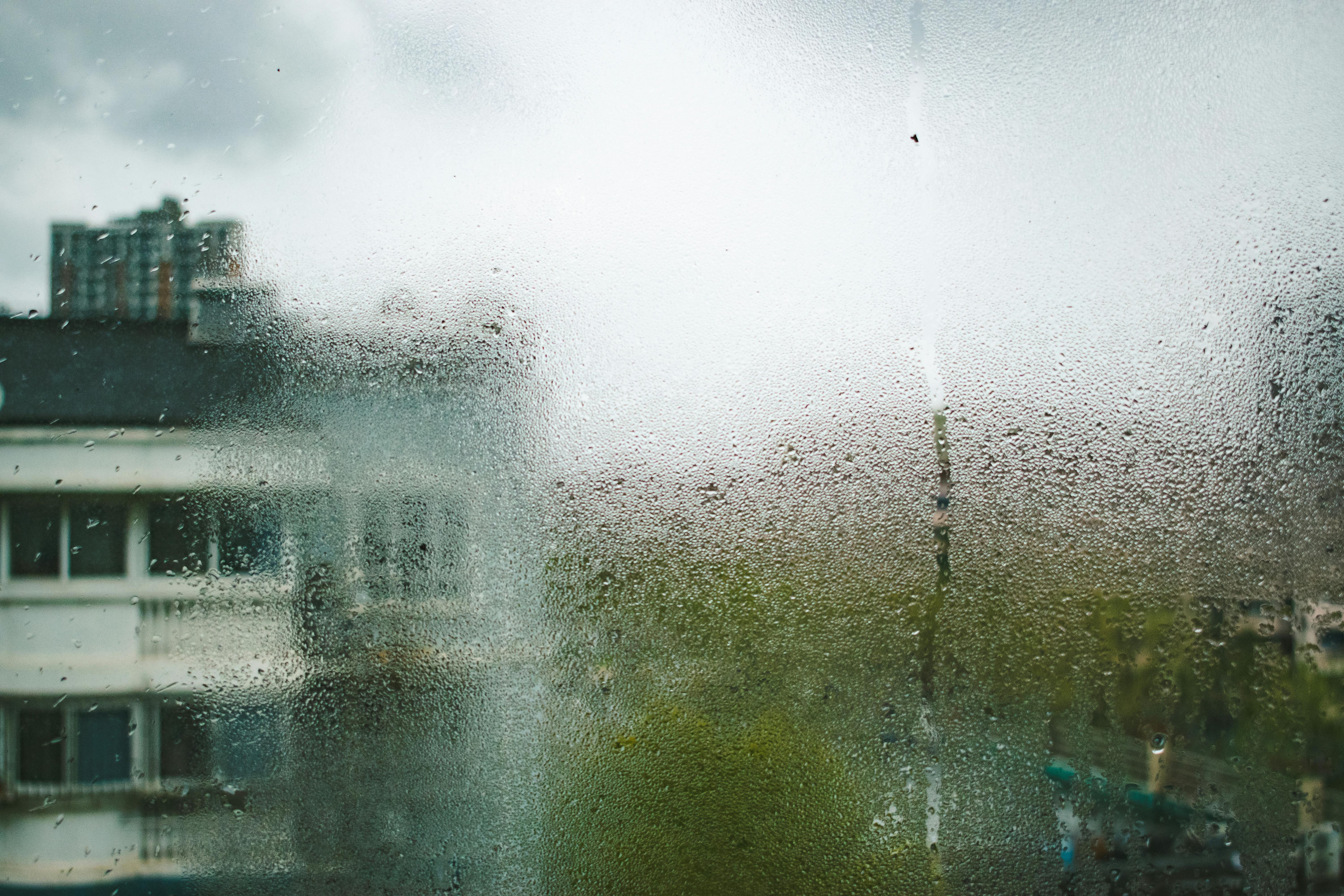
Condensation and moisture defects are one of the most misunderstood problems in modern Australian homes. Tightly sealed, energy-efficient construction traps humidity inside the building envelope, and when that moisture has nowhere to go, it migrates into wall cavities, roof spaces, and subfloor zones where it causes mould growth, timber rot, and long-term structural damage.
The modern building problem: sealed homes and trapped moisture
Australian building regulations have progressively tightened thermal performance requirements under NatHERS (Nationwide House Energy Rating Scheme). The result is a generation of homes that are far better insulated and air-sealed than anything built before 2010.
The problem is ventilation. A house that is sealed tightly against outside air is also sealed against moisture escape. Every time someone cooks, showers, breathes, or dries a load of laundry indoors, humidity is added to the internal air. In an older, draughty home that moisture slowly migrates out through gaps and passive air movement. In a modern, well-sealed home it has to go somewhere else — and increasingly, it goes into the fabric of the building.
Builders and certifiers have historically focused on thermal insulation and air-tightness without equal attention to moisture management. That gap is now showing up as defect claims across every Australian state and territory.
Surface condensation vs. interstitial condensation
Understanding the difference between these two forms of condensation matters when you are documenting a defect claim.
Surface condensation is what most people recognise: warm, humid internal air contacts a cold surface — a window, a cold wall, a poorly insulated pipe — and the moisture in that air drops out as liquid water on the surface. You can see it. It is usually seasonal, most visible in winter mornings.
Interstitial condensation is the more serious and less visible problem. As warm, humid air from inside the home tries to diffuse outward through walls, floors, or the roof assembly, it passes through layers of different temperature and eventually hits a point cold enough to cause condensation within the structure itself. The moisture forms inside the wall cavity, inside the insulation batts, or within the roof assembly — places you cannot see without opening up the building. By the time it becomes visible as a damp patch or mould bloom on an internal surface, interstitial condensation has typically been occurring for months.
Five moisture hotspot locations in new builds
Roof cavities and insulation
Warm, moist internal air rises and accumulates in the roof cavity. If the ceiling is not adequately sealed, or if penetrations around downlights, exhaust fans, and wall plates are not properly air-sealed, humid air enters the roof space and saturates insulation batts. Wet insulation loses most of its thermal performance and becomes a substrate for mould.
The NCC requires sarking (a reflective foil layer) in certain climate zones and roof types, partly for its role in moisture management. Where sarking is missing, incorrectly lapped, or not taped at joins, moisture can accumulate against the underside of roofing. Condensation on the underside of metal roofing is a well-documented failure mode, producing drip staining on ceilings.
Wall cavities
Internal wall surfaces are warm. External wall surfaces in southern climates are cold in winter. When vapour from inside the home diffuses through plasterboard and insulation, it can reach the dewpoint temperature within the wall cavity and condense on the back of the external cladding or on wall framing timbers.
A vapour control layer on the warm side of the wall assembly is the standard way to limit this movement. Many builders do not install one, either because the NCC in their climate zone does not strictly require it or because it adds cost and complexity. NCC 2025 addresses this gap more directly than previous editions.
Under concrete slabs and floor coverings
Ground moisture is a separate but related issue. Concrete slabs can act as a pathway for moisture rising from the ground, particularly where the sub-slab vapour barrier has been punctured during construction or where the slab was poured without an adequate barrier.
True condensation under floor coverings occurs when a cold concrete slab meets warm, humid internal air — a particular problem in homes where the slab temperature lags behind internal air temperature during autumn and spring. Engineered timber floors and hybrid flooring are especially vulnerable: the flooring adhesive degrades, planks cup or gap, and the manufacturer’s warranty is often voided if the root cause is identified as moisture, regardless of whether that moisture came from occupant behaviour or a construction deficiency.
Wet areas
Bathrooms, ensuites, and laundries generate the highest internal humidity loads of any room in the home. Inadequate exhaust fan capacity is extremely common in new builds — the fan installed is often undersized for the room volume, or it discharges into the ceiling cavity rather than to the outside. Where exhaust fans discharge internally, every shower effectively injects humid air directly into the roof space.
Waterproofing membrane failures in wet areas are a separate defect pathway but interact with condensation: where grout joints crack or membrane continuity is broken at penetrations, water ingress combines with condensation to create persistent dampness behind tiles.
Windows and glazing
Condensation on window glass is often the first visible indicator that a moisture problem exists. Heavy condensation on double-glazed units — particularly if it appears between the panes, indicating seal failure — or condensation forming on window frames and reveals points to thermal bridging (where the frame conducts cold to the internal surface) or inadequate draught sealing at the perimeter of the window unit.
Window reveals that develop mould growth are a common presentation of this problem. The reveal is cold, the adjacent airspace is humid, and mould colonises the surface. Builders frequently attribute this to inadequate ventilation by the occupant rather than the window specification or installation.
NCC 2025 condensation management requirements
The National Construction Code 2025 introduced more explicit requirements for condensation management in building envelopes than any previous edition. The changes are particularly significant for climate zones 6, 7, and 8 — broadly, southern Victoria, Tasmania, the ACT, and alpine regions of New South Wales and Western Australia — where winter temperature differentials between inside and outside are large enough to drive significant interstitial condensation.
Under NCC 2025, builders must demonstrate that wall and roof assemblies have been designed with adequate attention to vapour movement, not just thermal insulation values. The code references condensation risk assessment as a compliance pathway, which means builders and their certifiers should be able to produce documentation showing how the assembly manages moisture.
If your home was built under a NCC 2025 permit and you are experiencing moisture defects, the absence of this documentation is relevant to your claim.
Which Australian regions are most affected
The highest risk zones are those with cold winters and moderate to high humidity: Tasmania (particularly Hobart and the Derwent Valley), southern Victoria (the Dandenong Ranges, Gippsland, and elevated areas west of Melbourne), the ACT highlands, and alpine regions of New South Wales. Perth and Adelaide experience cold winters that are drier, but poorly ventilated homes in climate zones 6 and above still carry meaningful condensation risk.
Tropical and sub-tropical zones face the inverse problem: summer condensation. In northern Queensland, Darwin, and the Top End of the Northern Territory, outdoor air is warm and extremely humid. Air-conditioned interiors are cold. The vapour pressure gradient runs inward rather than outward, driving moisture into the building envelope from outside. This produces its own set of wall cavity and ceiling condensation issues, particularly in homes with inadequate vapour management on the external face of the wall assembly.
Health impacts of moisture defects
Persistent moisture supports mould growth, and indoor mould exposure has established health consequences. Aspergillus species are common in building materials and can cause respiratory infections in immunocompromised occupants. Stachybotrys chartarum (black mould) produces mycotoxins associated with respiratory irritation and chronic fatigue symptoms in some individuals. Children and elderly occupants are most vulnerable.
Beyond health, the structural consequences compound over time. Timber wall framing that remains wet for extended periods develops rot, reducing the structural capacity of the frame. Insulation batts that are repeatedly saturated and dried out degrade significantly below their rated R-value. Both represent defects that affect the long-term integrity of the building.
Warning signs in your new home
The following symptoms, particularly when seasonal or appearing 6 to 18 months after first occupancy, should be investigated as potential moisture defects:
- A persistent musty or earthy smell, especially in rooms that are rarely opened
- Visible mould growth on walls, ceilings, window reveals, or in wardrobe corners
- Heavy condensation on windows, particularly on frames or reveals rather than just the glass surface
- Damp patches on walls below skirting boards or at the junction of wall and floor
- Bubbling, blistering, or peeling paint on internal walls or ceilings
- Floor coverings lifting at edges or showing cupping or gapping
The 6 to 18-month timeline is important. New buildings contain residual construction moisture in concrete, mortar, and plaster. That moisture dries out over the first year of occupancy. Genuine condensation defects often become apparent after the building has passed through its first complete heating and cooling cycle, when the interplay between the thermal envelope and internal humidity becomes established.
Documenting moisture defects
Photograph every symptom with the date and time visible in the image. Note the outdoor weather conditions (temperature, recent rainfall) and any indoor conditions you can measure or observe (indoor temperature, humidity if you have a hygrometer, recent occupant activity such as cooking or bathing). A cheap digital hygrometer costs less than $20 and provides objective readings that are far more useful than subjective descriptions in a dispute.
If you can access a moisture meter, take readings at affected areas and photograph the reading alongside the surface. Record the first date you noticed each symptom in writing — a dated text message to yourself or a note in a home maintenance log is sufficient. Written records created at the time of discovery carry much more weight in tribunal proceedings than reconstructed accounts prepared months later.
The builder vs. homeowner argument
When homeowners raise moisture defects, the most common builder response is to attribute the problem to occupant behaviour: drying clothes indoors, not running exhaust fans, having too many indoor plants, keeping the home too warm. Some of these factors do contribute to internal humidity, and builders are not always wrong to raise them.
The key question is whether the building as constructed complies with the NCC and the relevant Australian Standards for moisture management. A compliant building should be able to tolerate ordinary occupant behaviour without developing mould or structural moisture damage. The NCC and HBC (Home Building Compensation) insurance regimes do not require occupants to behave perfectly — they require the building to perform to code under normal use conditions.
To counter the occupant-behaviour argument, document your exhaust fan usage, your heating and cooling habits, and your indoor humidity readings. If your humidity levels are within the normal residential range (40 to 60 per cent relative humidity) and you are using exhaust fans as designed, that is strong evidence the building envelope is the problem rather than occupant behaviour.
Dispute pathways
Condensation that causes mould growth, insulation degradation, or timber rot may meet the threshold for a major defect under home building legislation, depending on the jurisdiction and the extent of structural impact.
State and territory pathways include:
- Queensland: QBCC for complaint lodgement and insurance claims; QCAT for disputes
- New South Wales: Fair Trading NSW for initial complaints; NCAT for formal hearings
- Victoria: DBDRV as mandatory first step before VCAT
- South Australia: Consumer and Business Services; SACAT
- Western Australia: Building and Energy; SAT
- Tasmania: TASCAT
In all jurisdictions, independent expert evidence from a building consultant or engineer is typically required to establish that a defect exists, that it is construction-related rather than occupant-caused, and to quantify the remediation required.
Remediation responsibilities
Where condensation is confirmed as a construction defect, remediation is the builder’s responsibility. Depending on the nature of the defect this might include installing or upgrading exhaust ventilation systems, retrofitting vapour control layers, improving roof space ventilation, re-laying floor coverings over a corrected moisture barrier, or replacing damaged insulation and framing.
Occupant-installed remediation measures — portable dehumidifiers, additional exhaust fans, vapour barrier paint — may reduce the immediate symptoms but do not address the underlying defect and should not be presented to a builder as evidence that the problem is solved.
Tip: Checka lets you log moisture readings, photograph defect locations, and create a dated paper trail from day one — so if a dispute arises, your evidence is already organised and ready to present to a building consultant or tribunal.
Key takeaways
- Modern energy-efficient homes seal in moisture as well as heat — without adequate ventilation design, interstitial condensation forms inside wall, roof, and floor assemblies where it causes mould, rot, and insulation failure.
- NCC 2025 introduced stronger condensation management requirements for climate zones 6, 7, and 8 (southern states and Tasmania); new builds in these regions should have documented compliance with vapour management requirements.
- Warning signs typically appear 6 to 18 months after first occupancy — photograph every symptom with dates, note indoor humidity readings, and document exhaust fan usage from the start.
- Builders commonly attribute moisture problems to occupant behaviour — counter this by keeping humidity records and demonstrating that the building does not comply with NCC requirements under normal residential use conditions.
- Condensation causing structural timber damage or significant mould may qualify as a major defect, triggering longer statutory warranty periods and access to HBC insurance in most Australian states and territories.
- Dispute pathways exist in every jurisdiction — QBCC and QCAT in Queensland, NCAT in New South Wales, DBDRV and VCAT in Victoria, SACAT, SAT, and TASCAT elsewhere — but all require independent expert evidence to succeed.
Free to download
Stop losing track of defects.
Checka helps you capture issues, stay organised, and arrive at handover with a complete record of your build.