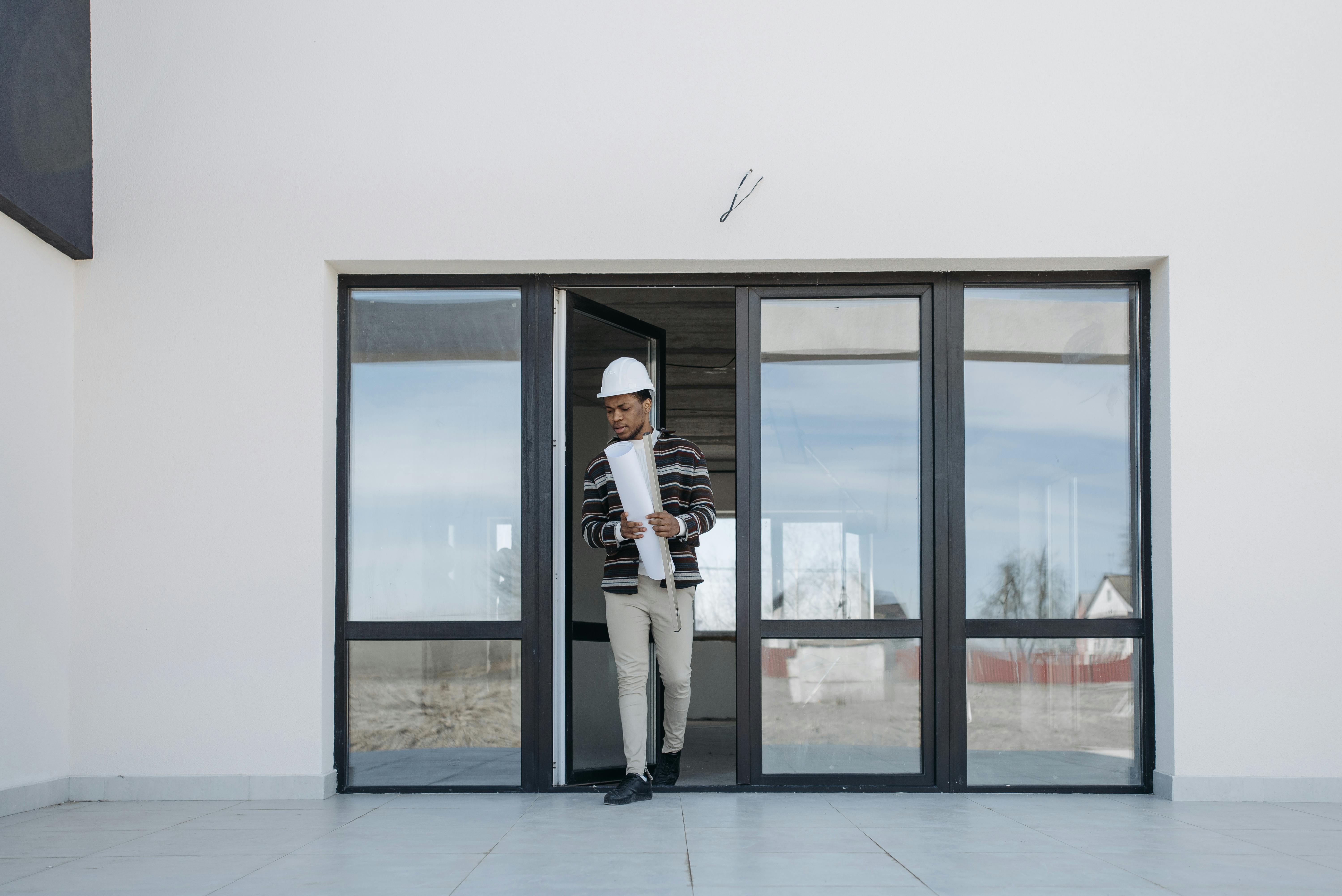
The lock-up stage is reached when your new home’s roof is on, external walls are clad, and all windows and external doors are installed — the building is physically “locked” against the weather. It is one of the most significant progress payment milestones in a standard HIA or MBA building contract, and it is your last practical opportunity to inspect structural framing, rough-in services, and wet-area waterproofing before internal linings permanently conceal them.
What “lock-up” actually means under a building contract
Under a standard HIA New Homes contract and most MBA-equivalent residential contracts, progress payments are tied to defined construction stages rather than to calendar dates. Lock-up is typically the third or fourth payment trigger, sitting after base and frame stages and before fixing (internal linings, doors, and trim).
The precise definition varies slightly between contracts, but the HIA standard wording requires the following to be substantially complete before the lock-up payment falls due:
- Roof covering fixed and battened
- External wall cladding or brickwork complete
- All external windows and external doors installed (operable and lockable)
- External waterproofing membranes applied where specified
Once you release the lock-up progress payment, you are acknowledging that this stage is complete to your satisfaction. That acknowledgement does not forfeit your rights under the statutory warranty — defects discovered later are still claimable — but it does signal the builder to proceed to the next stage. Identifying problems before lining is always faster and cheaper than identifying them after.
Who should carry out the inspection
There are two realistic options: an independent building inspector, or a thorough self-inspection using a structured checklist. Both have merit depending on your situation.
Independent inspector. A registered building inspector (the specific licence title varies by state — “building surveyor” in Victoria, “private certifier” in Queensland under QBCC licensing, “registered building practitioner” in NSW under the Design and Building Practitioners Act 2020) will produce a written report that documents defects with photographs. This report is useful evidence if you need to raise a dispute. Most charge between $400 and $700 for a stage inspection. The inspector will reference the National Construction Code (NCC) Volume Two (the residential provisions), relevant Australian Standards such as AS 1684 (timber framing), AS 3959 (construction in bushfire-prone areas where applicable), and your specific engineering drawings.
Self-inspection. If you are comfortable on a building site and have a detailed checklist, a self-inspection can identify the most obvious issues. You will not have the technical depth to assess structural framing compliance against AS 1684, but you can identify things that are visually wrong — missing flashings, poorly seated windows, exposed timbers, gaps in insulation. A self-inspection is best treated as a first pass, with findings escalated to your builder in writing. If you identify something significant, commission a professional report before releasing payment.
Regardless of who inspects, the inspection should happen before you receive — and certainly before you sign off on — the progress payment claim. Under the Building and Construction Industry Security of Payment Act (SOPA), which operates in all Australian states and territories, builders can pursue progress payments through adjudication relatively quickly, so it is important not to sit on an invoice without acting.
What to check at lock-up stage
Roof and gutters
The roofing is the first line of defence against weather damage to everything below. Defects here often don’t become apparent until the first heavy rain.
- Roof sheeting or tiles fixed correctly without gaps, cracking, or displaced units
- Ridge capping fully bedded and pointed (for tiles) or mechanically fixed (for metal roofing)
- Sarking (reflective foil insulation underlay) installed under the roof covering where required by the NCC or engineering specification
- Valleys correctly flashed — no exposed timber visible beneath valley material
- Eaves and fascia boards correctly fixed, with no twisting, splitting, or gaps
- Gutters installed to correct fall (minimum 1:500 per AS/NZS 3500.3) with no visible sags
- Downpipes present and connected to stormwater, not discharging onto footings or excavated areas
- Roof penetrations (flues, vents, skylights) correctly flashed and sealed
- Box gutters (if present) have overflow provisions per NCC Volume Two
- Barges and verge trim fixed and line-consistent
Windows and external doors
Windows and doors installed correctly at lock-up prevent air infiltration, water ingress, and security vulnerabilities. They are also substantially harder to re-flash or reframe once linings are on.
- All windows and doors install plumb, level, and square — check with a 900 mm spirit level
- Window and door frames free from distortion, twist, or damage to corners
- Weather seals intact on all openable units — no crushed, kinked, or missing seals
- Flashings installed above all windows and doors, lapping correctly over the wall cladding below
- Sill flashings present and directing water outward
- Weep holes in sliding door sill tracks clear and unobstructed
- Locks and latches operating correctly on all units
- No cracked or chipped glass panels — document with photos before linings go on
- Reveal depths consistent between windows on the same elevation
- Fire doors (if applicable) installed with correct hardware as per specification
External cladding and brickwork
The external skin of the building needs to be weathertight and structurally sound before work moves inward.
- Brickwork courses level and consistent, mortar joints uniform
- Cavity weep holes present at base of brick veneer at maximum 1,200 mm centres per AS 3700
- Perpendicular joints (perps) in brickwork open at damp-proof course (DPC) level to allow drainage
- No mortar bridging visible inside cavity (inspect through weep holes with a torch)
- DPC continuous and correctly lapped at corners and penetrations
- Ties visible at correct spacing — per AS 3700, generally every fifth course and within 300 mm of openings
- Lintel sizes and bearing lengths correct for opening widths per structural drawings
- Fibre cement or other sheet cladding correctly fixed with appropriate fasteners at specified centres
- Cladding joints and external corners with correct gap or cover strip per manufacturer’s specification
- Expansion joints present in long brick runs (typically required at 10 m intervals per AS 3700)
- No visible cracking in brickwork — hairline cracks at this stage may indicate framing issues below
Internal framing (pre-lining)
Once linings go on, framing is inaccessible. This is the only opportunity to confirm that the structural skeleton of your home meets the requirements of AS 1684 (timber framing) or AS 4100 (steel framing) and your specific engineering drawings.
- All structural timbers are the species, size, and grade specified in the engineering drawings
- Studs are plumb and at correct spacing (typically 450 mm or 600 mm centres)
- Double studs or trimmers present at all door and window openings
- Lintels (beams over openings) are the correct size, species, and have correct bearing on each end per drawings
- Nogging present at mid-height of walls as required — also check fire-rated walls for correct nogging
- Bracing — both permanent structural bracing panels and diagonal rod bracing — installed to drawing locations and correctly fixed
- Top plates lapped and fixed at all corners
- All timbers are dry (use a moisture meter if available — framing should be below 18% MC for lining)
- No timber showing signs of rot, blue-stain fungal growth, or termite damage
- All engineered timber (LVL beams, I-joists) free from delamination and correctly supported
- Floor joists, bearers, and blocking consistent with structural drawings and AS 1684
Rough-in services (plumbing, electrical, HVAC)
Rough-in is the phase where all pipes, cables, and ducts are run through the frame before lining. Once linings are on, accessing these for corrections requires cutting into walls and ceilings.
Plumbing
- All waste pipes correctly graded (minimum 1:40 for DN100, 1:60 for DN150 per AS/NZS 3500.2)
- Pipe penetrations through structural members sleeved or notched within permitted limits per AS 1684
- Hot and cold water supply pipes correctly colour-coded or labelled
- No exposed copper or CPVC pipe in locations prone to movement without adequate expansion provision
- All shower, bath, and basin wastepipes roughed in to correct position per plan
Electrical
- Conduit runs and cable routes consistent with electrical layout drawings
- No electrical cables within 25 mm of a surface that could be penetrated by fixings (or cables protected by a steel plate per AS/NZS 3000)
- Switchboard location and size consistent with drawings
- Cables not bundled excessively tight or kinked around corners
- Earthing and bonding provisions visible at wet areas
HVAC and ventilation
- Duct runs routed per mechanical drawings, with correct duct diameter for each branch
- Duct hangers or supports at correct intervals — unsupported runs cause sagging and noise
- Exhaust fan ducts routed to outside, not just into the ceiling cavity
- Return air pathways clear — undercutting of doors noted where required
Waterproofing (wet areas, pre-lining)
Wet area waterproofing must be applied before linings and tiling, but in many builds it is applied after rough-in and before lining. The lock-up inspection is a good time to verify waterproofing membranes are present and correctly applied, before tiles conceal them permanently.
- Waterproofing membrane present in shower recess and bath recess floor and walls to the specified height (minimum 1,800 mm to shower walls per AS 3740)
- Membrane turned up and bonded at all junctions — floor-to-wall coves formed correctly
- Membrane extends under the hob or threshold
- Laundry and ensuite floors have membrane applied where specified
- Membrane product is appropriate for the substrate — confirm with the builder that a system compliant with AS 3740 is being used
- No punctures, tears, or areas of insufficient coverage visible in membrane
- Membrane cured or dried before being covered — check that tiles have not been applied immediately after
Garage and driveway
The garage slab and associated works are often overlooked during lock-up inspections because they feel less critical — but defects here can be costly to rectify after the home is complete.
- Garage slab level and free from significant cracking (hairline cracks normal, cracks wider than 3 mm warrant investigation)
- Garage floor has correct fall to the door opening for drainage
- Garage door opening framing is plumb and square
- Overhead door header beam is the correct size per drawings
- Driveway crossover, if already poured, correctly graded away from footings
- Expansion joints present in concrete driveway or paths at correct spacing
- Retaining walls (if present) have visible weep holes and are correctly backfilled
How to document what you find
Regardless of who carries out the inspection, thorough documentation is essential. For every defect:
- Photograph the issue clearly — include a reference scale (a set of keys, a ruler)
- Note the location in the house — use grid references from your floor plan if possible
- Reference the relevant standard or specification where you can (e.g. “insufficient bearing on lintel — appears to be less than 90 mm required by AS 1684”)
- Submit findings to your builder in writing — email or a documented message in your builder’s portal — before releasing the progress payment
Under the statutory warranty provisions in all Australian states (HIA contracts typically incorporate a minimum 6-year structural warranty aligned with state legislation), documented defects that are not rectified before handover can still be pursued. But early documentation is always better than late documentation.
Releasing the progress payment
Under a standard HIA contract, the lock-up progress payment is typically due within a few days of the builder’s invoice. Before releasing:
- Confirm in writing with your builder that the stage is complete and available for inspection
- Carry out the inspection (or receive the inspector’s report)
- Submit any defects in writing with a reasonable timeframe for response
- If defects are minor and the builder commits to rectifying them, you may choose to release payment with written confirmation of the commitment
- If defects are significant — particularly structural or waterproofing issues — seek advice before releasing. State-based building regulators (QBCC in Queensland, NSW Fair Trading in New South Wales, Victorian Building Authority in Victoria) can provide guidance on your rights
Do not withhold payment indefinitely without cause — SOPA adjudication can move faster than you expect, and unreasonable withholding creates its own legal exposure.
Key takeaways
- Lock-up is reached when the roof, external cladding, and all windows and external doors are installed — the building is physically weatherproof and lockable
- It is a defined progress payment trigger under HIA and MBA contracts, and you should inspect thoroughly before releasing the payment
- An independent building inspector will assess compliance against the NCC, AS 1684, AS 3740, and your engineering drawings; a self-inspection using a structured checklist can identify obvious issues but has limits
- The most consequential items to check at lock-up are internal framing, rough-in services, and wet-area waterproofing — all of which will be hidden once linings are installed
- Document every defect in writing with photographs and submit to your builder before signing off on the stage payment
- Statutory warranties continue to apply after lock-up payment is released — but early identification and documentation of defects is always faster and cheaper than pursuing them post-handover
If you are tracking your build across multiple stages, the Checka app lets you log stage inspection items, attach photos, and maintain a documented record of defects and builder responses from slab to handover.
Free to download
Stop losing track of defects.
Checka helps you capture issues, stay organised, and arrive at handover with a complete record of your build.