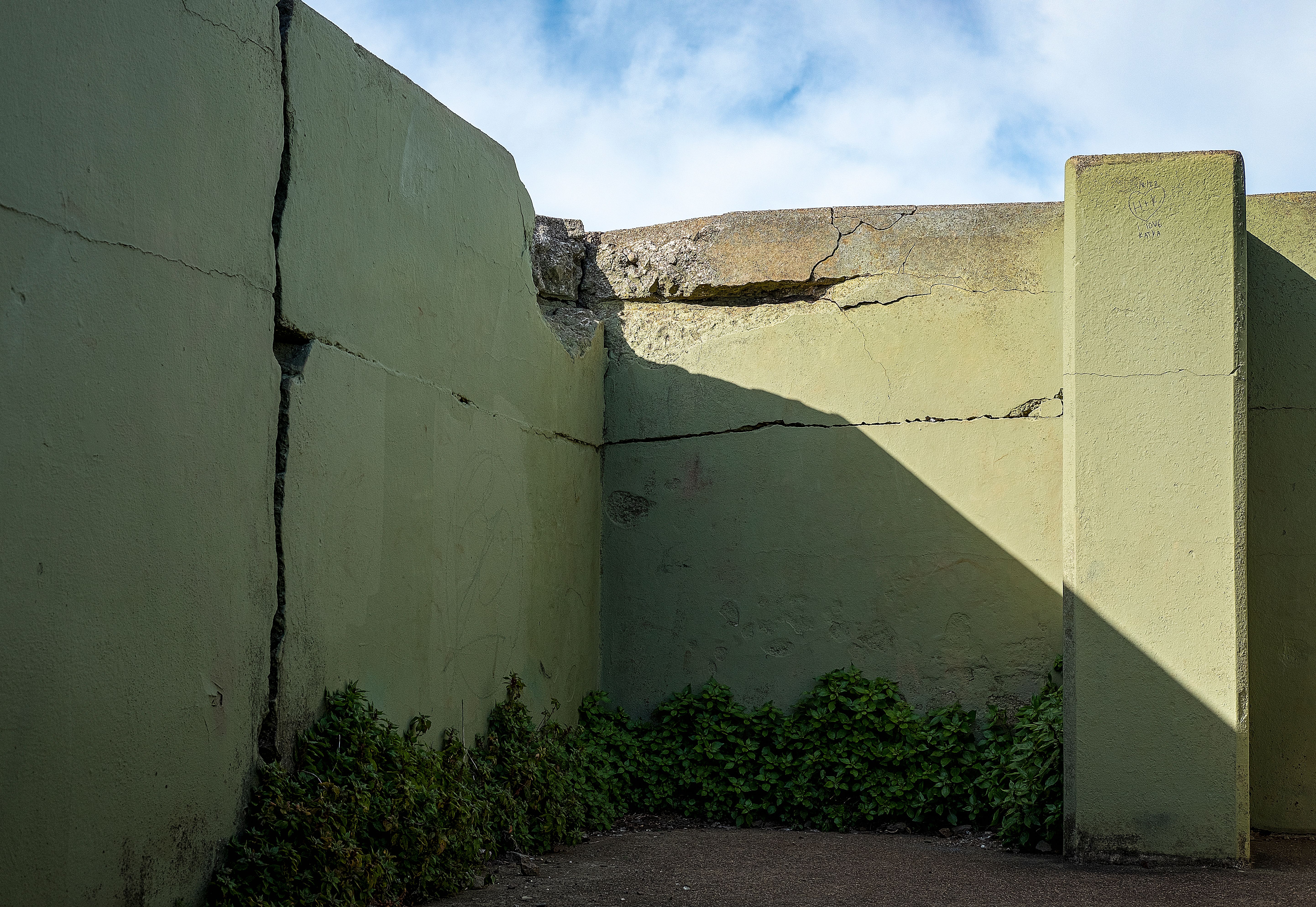
Structural defects in a new home are the most serious category of building fault because they affect the safety, stability, and long-term habitability of the property. If you suspect a structural problem before or after settlement, you have specific legal rights and warranty protections that differ significantly from those covering cosmetic defects.
What makes a defect “structural”
A defect is structural when it affects the structural integrity, load-bearing capacity, or weathertightness of the building. These three concepts are distinct but often overlapping.
Structural integrity refers to a building’s ability to carry and transfer loads without deforming, collapsing, or failing. Load-bearing capacity is the specific ability of individual elements — walls, columns, beams, foundations — to carry the weight imposed on them. Weathertightness means the building envelope keeps water out of the structure in a way that prevents damage to load-bearing components.
The National Construction Code (NCC) sets out performance requirements for structural reliability and weatherproofing in Australia. A defect that causes a building to fall below NCC performance standards is almost always classified as a major or structural defect under both common law and the specific residential building legislation in each state and territory.
Why structural defects are treated differently from cosmetic defects
Under most Australian state legislation and standard HIA contracts, defects fall into two broad categories: major defects and minor defects. Structural defects are the core of what legislation means by a major defect.
The practical consequences of this classification are significant. Minor defects typically carry a warranty period of around 12 months from practical completion. Major defects, including structural ones, attract statutory warranty periods of six or seven years depending on jurisdiction. In Queensland, the Queensland Building and Construction Commission (QBCC) administers a Home Warranty Insurance scheme that covers structural defects for up to six years and three months. In New South Wales, the statutory warranty for major defects under the Home Building Act 1989 is six years. Victoria and South Australia have equivalent protections under their respective residential building legislation.
These longer periods exist because structural problems often take time to manifest. A foundation issue may not produce obvious cracking for 12 to 24 months. A waterproofing failure in a wall cavity may not cause visible framing damage until several wet seasons have passed. The legislatures in each state recognised that a standard 12-month defect period would leave homeowners without a remedy for precisely the problems that matter most.
Beyond state legislation, the Australian Consumer Law (ACL) provides an additional layer of protection. Where a residential building fails to be fit for purpose or is not of acceptable quality, the ACL imposes consumer guarantees that operate independently of contractual warranty periods. Builders who argue that the contractual defect period has expired are not automatically shielded from ACL liability for major structural failures.
Common structural defects in new homes
Foundation and slab problems
Concrete slab and footing issues are among the most consequential structural defects because they affect the entire building above. Common problems include:
- Shrinkage cracks in the slab surface during curing, which are generally cosmetic
- Structural cracks that travel through the full depth of the slab, indicating differential settlement or heave
- Differential settlement, where one part of the slab sinks relative to another due to poor soil compaction or inadequate site preparation
- Reactive soil heave, common in clay-rich Australian soils (particularly in Queensland, Victoria, and South Australia), where the slab lifts unevenly as the soil expands with moisture
- Slab edge damage, where inadequate cover to reinforcement leads to spalling and corrosion of steel
Differential settlement is particularly serious because it introduces bending forces that the slab and the structure above were not designed to carry. Doors that stick, floors that slope visibly, and windows that crack at the corners are common early indicators.
Wall framing problems
Timber framing must comply with Australian Standard AS 1684 for residential timber framing. Defects in framing are often hidden behind wall linings and only become apparent through secondary symptoms. Watch for:
- Walls that are visibly out of plumb (leaning or bowing)
- Incorrect stud spacing that fails to support the loads from cladding, insulation, and wall lining
- Missing noggings (horizontal bridging pieces between studs), which reduce racking resistance and wall rigidity
- Inadequate bracing, particularly important in cyclone regions governed by NCC climate zones
Wall framing defects are often latent, meaning they are present from the time of construction but not visible until the wall is opened or the defect produces a secondary symptom such as cracking plasterboard or a door frame that shifts out of square.
Load-bearing wall failures
A load-bearing wall carries loads from the structure above and transfers them to the foundation. When builders or trades create openings in load-bearing walls without installing correctly sized lintels, or use undersized structural members, the result can be progressive deflection and cracking above the opening.
This problem occurs most commonly at garage openings, large window openings, and where internal walls are modified late in construction. The NCC and Australian Standards specify minimum lintel sizes for different spans and load conditions. A lintel that is undersized will deflect excessively over time, causing the masonry or framing around it to crack.
Roof structure failures
Roof trusses and rafters must carry not just the weight of the roof covering but also wind uplift loads and, in some climates, snow loads. Structural defects in roof framing include:
- Undersized members that deflect beyond acceptable limits under load
- Poor truss connections, including inadequately nailed or incorrectly installed gang-nail plates
- Missing tie-downs, which are the mechanical connections between the roof frame and the wall top plate that resist uplift in high-wind events
- Incorrect spacing of trusses or rafters that puts loads on elements not designed to carry them
In cyclone-affected areas of Queensland and Western Australia, NCC tie-down requirements are particularly stringent. Failures here are not just a building defect matter — they are a life safety issue.
Connection failures
A building is only as strong as its connections. Structural connection failures that appear in new homes include:
- Beam-to-post connections that rely on insufficient fixings or incorrectly specified hardware
- Wall frame to slab connections, where the bottom plate is not anchored adequately to resist lateral loads
- Roof frame to wall plate connections, as noted above in the context of wind tie-downs
Connection failures often only become visible after a load event such as a storm, at which point the damage is already done.
Waterproofing failures that cause structural damage
A waterproofing failure is initially a weathertightness defect but can progress to become a structural one. When water enters wall cavities through inadequate flashings, failed window seals, or incorrectly installed cladding, it saturates timber framing. Sustained moisture causes timber to decay, dramatically reducing its structural capacity. In worst cases, structural members are found to be carrying loads at a fraction of their original capacity.
This is why courts and tribunals treat significant waterproofing failures as major defects, even when the original symptom was a water stain on a wall rather than a visible structural failure.
Cosmetic cracks versus structural cracks
Not every crack is a structural concern, but every crack deserves assessment. The key diagnostic factors are width, pattern, location, and direction.
Cosmetic cracks are typically:
- Hairline (less than 0.2 mm wide)
- Restricted to surface render or paint
- Horizontal in plasterboard, following the joints between sheets
- Appearing at internal corners where movement is expected
Structural cracks are more likely to be:
- Wide (greater than 2 mm), particularly if growing
- Diagonal, running at 45 degrees from the corners of window and door openings
- Stepped, following the mortar joints in brickwork
- Through-cracks, visible from both sides of a wall
- Associated with movement, such as doors or windows that no longer close properly
- Located above lintels, at slab edges, or at re-entrant corners of the slab
Width alone is not sufficient to classify a crack. A 3 mm crack in a non-structural partition wall is less concerning than a 1 mm diagonal crack above a load-bearing lintel. Context is everything, and if you are uncertain, professional assessment is warranted.
Latent versus patent defects
A patent defect is visible and discoverable on reasonable inspection. A latent defect is hidden and not discoverable without opening up elements of the building or waiting for a problem to manifest.
The distinction matters because your obligations are different. At handover, you are expected to identify patent defects through reasonable inspection. Failing to note a patent defect at handover does not necessarily extinguish your rights, but it can complicate your claim. Latent defects, by contrast, can be claimed when they become apparent, provided you are still within the statutory warranty period.
This is one reason why the longer statutory warranty periods for structural and major defects are so important. Many structural problems are latent at handover and only become apparent after one or more full seasonal cycles have imposed loads on the building.
Australian warranty and legislative framework
In Australia, the statutory warranty framework for residential building work operates through state and territory legislation, but with significant consistency across jurisdictions:
- Queensland: The QBCC Act provides a six-year-and-three-month warranty for structural defects, backed by QBCC Home Warranty Insurance for licensed builders
- New South Wales: The Home Building Act 1989 provides a six-year statutory warranty for major defects
- Victoria: The Domestic Building Contracts Act 1995 and the Victorian Building Authority administer equivalent protections; VCAT hears residential building disputes
- South Australia: The Building Work Contractors Act 1995; SACAT (South Australian Civil and Administrative Tribunal) handles disputes
- Tasmania: The Building Act 2016; TASCAT (Tasmanian Civil and Administrative Tribunal) handles disputes
- ACT and NT: Equivalent legislation with similar warranty periods for major defects
The HIA (Housing Industry Association) and MBA (Master Builders Association) produce standard residential building contracts that incorporate these statutory warranties. Even where a contract purports to limit liability, the statutory minimums cannot be contracted out of.
UK context: the Building Safety Act 2022
For homeowners in the United Kingdom, the Building Safety Act 2022 significantly extended the limitation period for claims relating to defective buildings. For certain higher-risk buildings and for claims under the Defective Premises Act 1972, the retrospective limitation period was extended to 30 years for existing buildings and 15 years for new buildings. This represents a substantial change from the previous six-year limitation period and gives UK homeowners considerably more time to pursue structural defect claims.
New Zealand context: the Building Act 2004
In New Zealand, the Building Act 2004 and the weathertight homes provisions that arose from the leaky buildings crisis of the 1990s and 2000s established specific protections for structural and weathertightness defects. The Weathertight Homes Resolution Services Act 2006 created a dedicated resolution pathway. Structural defects in New Zealand generally attract a ten-year limitation period under the Limitation Act 2010, running from the date the defect was discovered or reasonably discoverable.
When to call a structural engineer
A building inspector can identify many defects and flag concerns, but there are situations where a structural engineer is the appropriate professional. Call a structural engineer before proceeding if you observe:
- Diagonal cracking above multiple window or door openings
- Visible deflection or sagging in floor systems, beams, or roof members
- Walls that are measurably out of plumb by more than acceptable tolerances
- Any crack that is actively growing, as evidenced by monitoring marks
- Water staining deep inside wall cavities, particularly if framing is visible and appears discoloured
- A roof that appears to have shifted, with ridge lines that are no longer straight
- Any situation where your building inspector has flagged a possible structural concern without being qualified to confirm it
Engaging a structural engineer early produces a professional report that carries significant weight in any subsequent dispute. A report from a structural engineer that identifies a defect and attributes it to a construction failure is far more persuasive before a tribunal than homeowner photographs alone.
Documenting structural concerns
Thorough documentation is the foundation of a successful defect claim. When you identify or suspect a structural defect, capture the following:
- Photographs from multiple angles with a scale reference (a ruler, tape measure, or coin) beside the defect
- Video if the defect involves movement, such as a door that does not close or a floor that bounces
- Location notes: which room, which wall face, the height above floor level, and proximity to windows, doors, or corners
- A written description that is factual and specific: “diagonal crack 300 mm long running from the top-left corner of the kitchen window at approximately 45 degrees, approximately 2 mm wide at the widest point, visible on the internal plasterboard face”
- Date of first observation and any subsequent observations showing change
- Any builder communications relating to the defect, including responses, proposed remediation, or denials
When serving a formal defect notice under your contract or under state legislation, use the same factual, specific language. Describe what you can see and measure. Leave the characterisation to the expert reports.
Tip: Checka lets you log structural concerns with timestamped photos, voice notes, and location tags directly on site, then export a formatted defect report ready to attach to a formal notice to your builder.
Key takeaways
- A structural defect affects the load-bearing capacity, structural integrity, or weathertightness of the building and is the most serious category of building fault.
- In Australia, major structural defects attract statutory warranty periods of six to seven years depending on state, backed by legislation such as the Home Building Act 1989 (NSW) and the QBCC Act (QLD), with ACL protections applying independently of contractual periods.
- Diagonal cracks above openings, out-of-plumb walls, deflecting roof members, and water-damaged framing are red flags requiring professional structural assessment before any formal notice is served.
- Latent defects are not visible at handover and can be claimed when discovered, provided you are still within the statutory warranty period.
- In the UK, the Building Safety Act 2022 extends liability for structural defects to 15 years for new buildings; in New Zealand, a ten-year limitation period applies under the Building Act 2004.
- Document every structural concern with photographs, measurements, a specific written description, and the date of first observation before serving any formal notice.
Free to download
Stop losing track of defects.
Checka helps you capture issues, stay organised, and arrive at handover with a complete record of your build.