
Most homeowners commission one inspection — the pre-handover, or PCI. A smaller number also get a frame inspection. But there are up to nine points in a typical build where a professional inspector can add real value. The stages you skip are usually the ones where mistakes get hidden — because once the next stage begins, what happened underneath is no longer visible.
Understanding the full inspection schedule doesn’t mean you need to commission all nine. It means you can make deliberate decisions about where to spend your budget and what to watch for yourself.
Why independent inspections matter
Your builder has their own inspection process: certifiers, site supervisors, mandatory council or private certifier sign-offs. These are real checks — but they’re not working for you. They’re checking for minimum code compliance, not necessarily for the quality and workmanship standards your contract requires.
An independent inspector is the only person on site whose sole job is to represent your interests. They know Australian Standards, they know what to look for at each stage, and they produce a written record you can act on. More importantly, they give you something that’s hard to get any other way: documented evidence that a specific issue existed at a specific point in time. That evidence matters enormously if you need to pursue a warranty claim later.
The 9 inspection stages
1. Pre-Slab Before concrete is poured. An inspector checks footings depth and dimensions, reinforcement placement, and plumbing groundwork. This is one of the few chances to verify the foundation before it’s permanently set. Issues found here are cheap to fix; issues missed here can become structural problems years later.
2. Slab After the concrete pour. Checks include levelness (critical for everything built on top), structural integrity, and correct setdowns for wet areas. A slab that’s out of level creates problems that compound through every subsequent stage.
3. Frame The structure is up but walls aren’t enclosed yet. This is one of the most important inspections in the entire build. An inspector checks framing dimensions, bracing, fixing, and overall alignment against the plans. A defective frame affects everything built around it — and once plaster goes on, you can’t see it.
4. Lock-Up The external shell is complete — roof, windows, doors, and cladding are all in. Checks cover weatherproofing, flashing details, window and door operation, and roof material installation. Getting this right before internal fit-out begins avoids moisture and weather damage to everything inside.
5. Fixing / Pre-Plaster Electrical rough-in, plumbing, insulation, and internal mechanical systems are in place but walls aren’t yet closed. This is the last chance to see what’s inside your walls. Once plaster goes up, any issues with wiring runs, pipe placement, or insulation gaps are hidden for the life of the building.
6. Waterproofing Membranes and drainage in wet areas — bathrooms, laundry, balconies — are installed prior to tiling. Waterproofing defects are one of the most common and costly defect categories in residential construction. An inspector at this stage checks membrane coverage, upstands, and drain details before tiles make everything inaccessible.
7. Pre-Handover / PCI Near completion. This is the inspection almost every homeowner gets. An inspector walks the entire home and checks finishes, fittings, paintwork, joinery, fixtures, and general workmanship. By this stage issues are visible — but some defects that started earlier in the build will only be discoverable once you’re living in the home.
8. Handover The formal walkthrough on the day keys are exchanged, confirming that outstanding items from the PCI have been attended to and the home is complete and ready to occupy.
9. Maintenance / Warranty Conducted at three to twelve months after move-in, this inspection captures settlement cracks, seasonal movement, and defects that only emerge once the home is lived in. It’s often skipped — but it’s the stage that protects you during the statutory warranty period, when builder obligations are still active.
The reality: what most people actually get
All nine inspections is the ideal. In practice, cost and compressed build schedules mean most homeowners end up with two or three. That’s a reasonable position — as long as you’re choosing the right two or three.
If you’re working to a budget, these are the stages that deliver the most value:
- Frame — Almost always worth it. One of the most critical points before walls go on and problems get hidden.
- Pre-Plaster / Fixing — The last chance to see what’s inside your walls. Defects in wiring, plumbing, or insulation found here are relatively simple to fix; found later they require destructive access.
- Waterproofing — Often skipped. Shouldn’t be. Wet area failures are expensive, disruptive, and common.
- PCI / Pre-Handover — Nearly universal, and genuinely useful for catching finish-level defects before you take ownership.
- Maintenance at 3–12 months — Frequently overlooked because the build feels finished. But this is when settlement issues show up and your statutory warranty is still active.
Being honest about budget means accepting trade-offs. If you can only afford two inspections, frame and PCI is a sensible baseline. If you can stretch to three, add waterproofing or pre-plaster depending on your build type.
How to work effectively with your inspector
Book early. Good independent inspectors in most markets are booked weeks in advance, and inspection windows are narrow — typically 24 to 48 hours between when a stage is ready and when the next stage begins. If you’re not already on an inspector’s schedule, now is the time.
Be on-site during the inspection if you can. Reading a report is useful; watching an experienced inspector point to issues in person is more useful. Ask them to walk you through the key findings before they leave.
Ask your inspector what to watch for at the next stage. They see the same builds repeatedly and can often flag what’s likely to follow from what they’ve found.
Treat the report as the beginning of a process, not the end. A list of defects without follow-up achieves nothing. Every item needs to be raised with your builder, responded to, and tracked until it’s closed out.
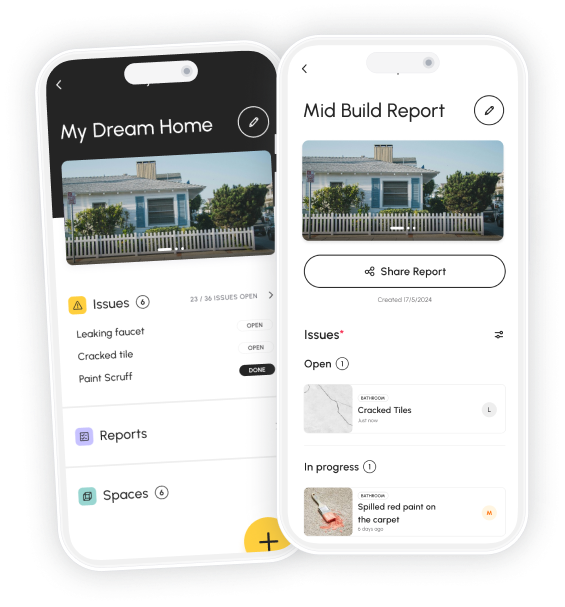
What the report allows you to do
A professionally written inspection report gives you several things that are hard to obtain any other way: a dated, third-party record of what existed at a specific point in the build; references to the relevant Australian Standards or NCC clauses that support your concerns; documented evidence for warranty claims if disputes arise; and a structured list of items that need to be resolved.
The report is only as useful as what you do with it. If you’re not sure how to action findings, raise them with your builder, or manage outstanding items through to resolution — our guide on what to do with a building inspection report covers the process step by step.
Key takeaways
- There are up to 9 inspection points in a typical residential build — most homeowners only use 1 or 2, but choosing the right ones makes a significant difference to what gets caught
- Frame inspection is almost always worth the cost: it’s one of the most critical stages before walls close and problems get permanently hidden
- Waterproofing is frequently skipped and shouldn’t be — wet area membrane failures are common, expensive, and completely invisible once tiles are laid
- Pre-plaster / fixing stage is your last chance to see inside your walls — after this, any defects in wiring, plumbing, or insulation require destructive access to reach
- PCI is nearly universal but catches only finish-level issues; problems that started at frame or slab stage are already locked in by the time you get to it
- Each inspection produces a dated, third-party record — without this, connecting a defect to the original construction during the warranty period becomes very difficult
Free checklists for each stage
We’ve put together free printable checklists for the key inspection stages — useful to have on-site or to cross-reference against your inspector’s report:
- Slab Stage Inspection Checklist
- Frame Stage Inspection Checklist
- Lock-Up Stage Inspection Checklist
- Practical Completion Inspection Checklist
Free to download
Stop losing track of defects.
Checka helps you capture issues, stay organised, and arrive at handover with a complete record of your build.