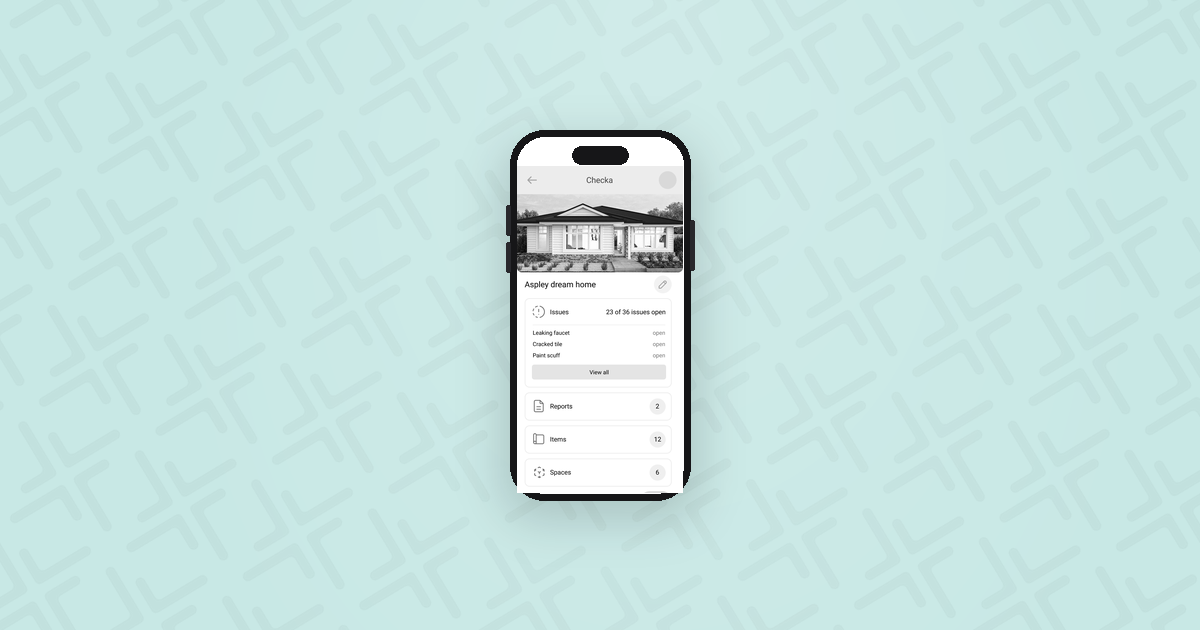
I built a home. I found nearly a hundred defects. And when I asked the builder how they tracked any of it, I got an answer that made me realise I had to build something myself.
The build
It was a significant investment. Years of saving, months of construction, a project manager and site supervisor coordinating the work.
Issues started appearing early. A crack after framing. A tiling problem once the bathroom was grouted. Something that didn’t look right with the waterproofing. I raised each one. Some got fixed. But there was no shared record, no confirmation, no way to close the loop.
Over time it became a vortex. Things were being done, but the list kept growing. The unsettling part wasn’t any single defect. It was not being able to see the full picture. What was actually open? What had been genuinely resolved versus just verbally acknowledged?
By the time the pre-handover walkthrough came around, that unease had been building for months. Room after room, issue after issue. Cracks running from window corners. Tiles not flush. Paint applied over dust. Gaps around door frames. Skirting boards cut short. Waterproofing details that didn’t look right. By the end, the count was approaching a hundred items.
Not all of them were serious. But enough were significant that the question finally had to be asked out loud: is there a system for tracking these? How will I know when each one has been resolved?
The response that started everything
Before the walkthrough, I’d already sent a formal question to the project team asking exactly this. Three questions, in writing:
- Do you have a process to keep track of these issues?
- Are they accessible somewhere and visible to me as the customer?
- Are the issues classified, commented on and is there a remediation plan, with desired outcomes?
The response arrived the next day.
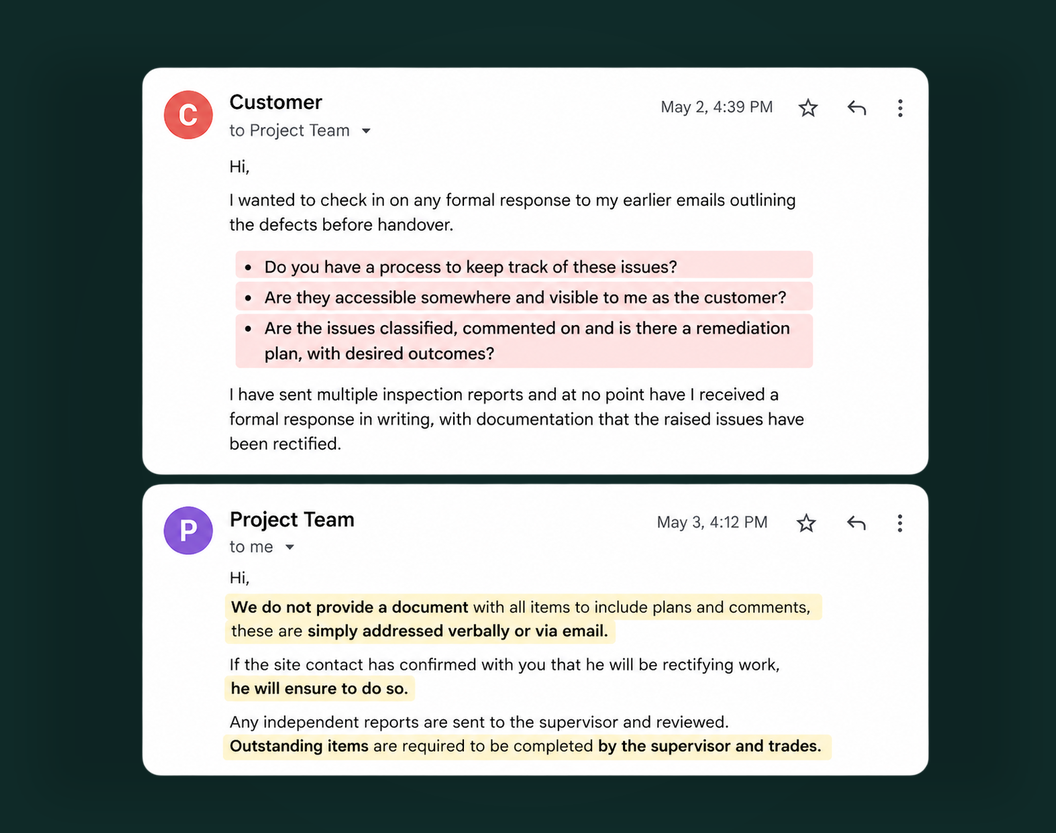
“We do not provide a document with all items to include plans and comments, these are simply addressed verbally or via email.”
That was it. No shared log. No formal process. No acknowledgment in writing of what I’d identified. Outstanding items would be “required to be completed by the supervisor and trades” — with no mechanism for me to see what was outstanding or verify anything had actually been done.
When you’ve invested hundreds of thousands of dollars into a home, “we handle it verbally” is not a reassuring answer.
Why the system was broken for everyone
I want to be clear: this wasn’t a bad builder. That’s not really what was happening.
The site supervisor was managing around twenty houses simultaneously. He was stretched across job sites, coordinating subcontractors across all of them, working from his own mental list and a clipboard. He wasn’t ignoring defects — he simply didn’t have the systems to stay across everything, and neither did the organisation supporting him.
The burden fell entirely on me. If I wanted my defects tracked, I had to track them myself. If I wanted follow-up, I had to initiate it. If I wanted to know whether something had been fixed, I had to arrange another visit and check.
There was no shared visibility. No single list we were both working from. Everything lived in email threads, text messages, verbal conversations on site, and individual memories — none of which is a substitute for a proper record.
Six hours to do what a system should do in minutes
Rather than leaving the walkthrough without a proper record, I went back through every room and documented everything properly. That meant:
- A close-up photo of each defect
- A context photo showing where in the room it was
- A voice note describing the issue
- A written note with the room, location, and description
- Cross-referencing anything that looked like a standard might apply
It took six hours. At the end of it, I had hundreds of photos, multiple voice recordings, and a long written list. It still wasn’t complete — some photos were too dark, some descriptions were vague, some items had probably been missed entirely.
Six hours to produce a record that was still imperfect. I couldn’t go through that again. And I knew most people don’t — the walkthrough takes ninety minutes, a few photos get taken, and the outcome depends on the builder’s goodwill.
That’s not good enough for a transaction this significant.
The first sketch
That week, we started sketching out what needed to exist. Not a full product spec. A rough flow of what the problem actually required. A way to add an issue fast, with a photo, a description, and a location. A way to see every open item in one place. A way to generate a report that could be shared with the builder.
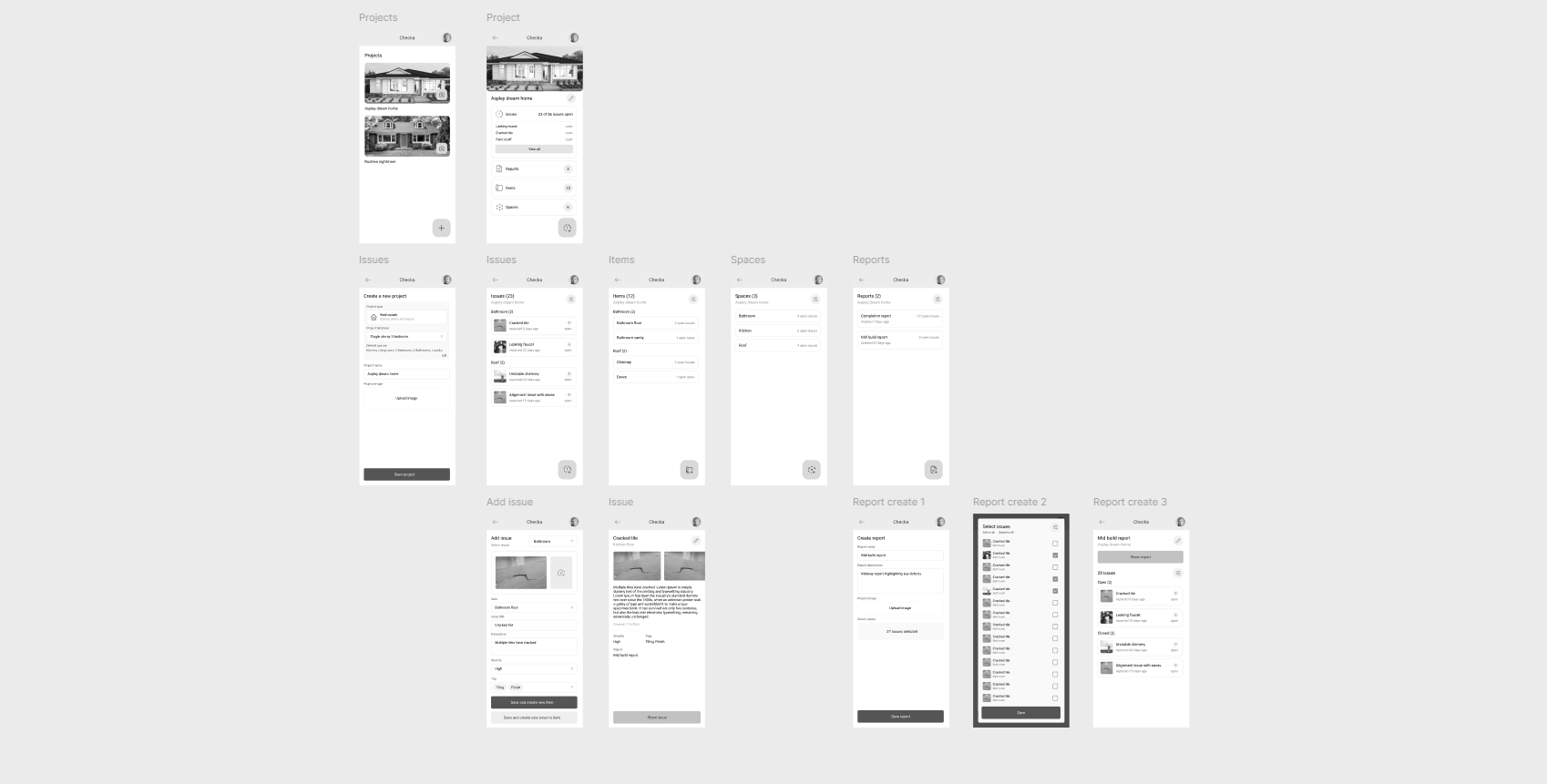
At that point, there were no voice notes. No AI defect classification. Just logging: capture the issue, track its status, share the record. The focus was simplicity above everything else.
Two things drove it from the beginning. First, AI — not as a gimmick, but as a practical way to close the knowledge gap between a homeowner and a builder. Most people don’t know what a defect should be called, which standard applies, or whether what they’re looking at is cosmetic or structural. We knew AI could bridge that. It means someone without a construction background can still produce a record that holds up.
Second, price. Building a home is one of the largest financial commitments most people will ever make. The last thing they need is expensive software on top of it. From the start, we wanted Checka to be genuinely affordable for the people who actually need it.
The wireframes weren’t polished. But the principles were clear from day one.
What we built
Checka is built directly around that experience. The core is simple: log a defect, add a photo, set a status, track it through to resolution. Everything is timestamped. Every item is linked to its photo. The whole ledger can be shared with a builder or exported if things escalate.
The Smart Import feature takes it further — upload a PDF from a professional inspection firm and every defect in that report surfaces automatically into your tracking list. No manual re-entry. No defects buried on page thirty-four.
For homeowners navigating a multi-stage build, understanding which stages are worth commissioning matters too — because defects caught before the next stage begins are far easier to fix than ones discovered at handover.
The goal has always been the same: a homeowner who has just received a hundred-item report, or who has just walked through their home and found things they shouldn’t have, should be able to get everything organised, tracked, and in front of their builder without it taking six hours of their life.
No one should have to rebuild the system from scratch every time.
Key takeaways
- Defects accumulate throughout the build — not just at handover — and without a shared record, there’s no way to know what’s genuinely been resolved
- The uneasy feeling of a list that keeps growing with no visibility is one of the most common experiences of building a home
- “We handle it verbally” puts the entire documentation burden on the homeowner, on one of the largest financial decisions of their life
- Site supervisors managing twenty or more homes simultaneously don’t have the bandwidth to stay across every outstanding item without proper systems
- Six hours of manual documentation still produced an incomplete record — there had to be a better way
- Checka was built to close that gap: a shared, live view of every defect from the first issue through to final handover
Free to download
Stop losing track of defects.
Checka helps you capture issues, stay organised, and arrive at handover with a complete record of your build.